
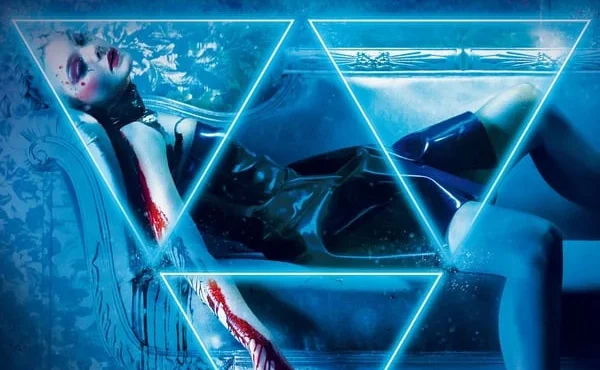

“Every angel is terrifying” — Rainer Maria Rilke
[Warning: spoilers ahead]
In 2016, the Danish filmmaker Nicolas Winding Refn unveiled to the world a new cinematic creation—one steeped in beauty and in stylistic and formal purity: The Neon Demon.
A true masterpiece, the film represents the culmination of a creative journey that began many years earlier, its roots traceable to Refn’s earliest, boldly experimental works—most notably the original Bronson (2008). Yet it was the compelling Drive (2011) that truly catapulted Refn into the global spotlight, defining his cinematic aesthetic. The film also marked the beginning of his enduring friendship with actor Ryan Gosling and earned Refn the Prix de la mise en scène at the Cannes Film Festival. He went on to create Only God Forgives (2013), a profoundly symbolic work built on glances and silences heavy with unspoken meaning. Throughout this evolution, Refn’s cinematic universe shifts before our eyes—from the raw power of virile, masculine figures to the delicate yet lethally composed female characters. With The Neon Demon, Refn distills all his previous experiences into a mature work of immense artistic and aesthetic impact.
A “director from the future,” as he likes to describe himself, Refn wields new expressive forms to captivate the viewer and welcome deeper reflection.
The plot
After meeting an aspiring photographer online, Jesse leaves her hometown in Georgia and heads to Los Angeles, chasing the dream of becoming a model at just sixteen. At first, everything appears to fall into place: her natural, untouched beauty and innocent charm quickly earn her a privileged place within the fashion community. Like a “sun”, Jesse radiates a unique vitality that captivates everyone around her, stirring both fascination and morbid intrigue among the men and women who inhabit fashion’s ambiguous world. As she climbs higher, the young protagonist undergoes a striking metamorphosis, gradually awakening to a deeper awareness of her own nature and power. But blinded by the shimmer of success, she remains oblivious to the threat closing in around her—a danger born of wickedness, obsession, and ruthless ambition.

Structure and technical aspects
Everything begins at the heart of its story, and with a deep understanding of its central themes. To allow the many layers of meaning to unfold fully and reach the viewer in their purest form, every technical element must strive for perfection.
In The Neon Demon, the cinematography reveals Refn’s meticulous attention to visual composition, with each frame carefully balanced. Drawing from the visual language of fashion, the film becomes a beautiful climax of color: vivid, sometimes clashing lights alternate with soft, dreamlike tones. The neon—highlighted in the title—dominates the aesthetic. This radiant, artificial glow, evocative of the 1980s, carries, in its very essence, a sense of the “new” and the avant-garde.
Another important aspect to consider is the film’s soundtrack, which—like the screenplay—provides a seamless structure to the entire work. Longtime collaborator Cliff Martinez composed an electronic score that is immersive hypnotic, and emotionally charged, amplifying the mood while conveying the underlying ideas of each scene. Tracks such as Neon Demon and Runway exemplify this approach: echoing the synth-driven sounds of the 80s—Vangelis and Giorgio Moroder foremost—they swirl with pulsating rhythms that draw the listener in. The notes become spells, whispered incantations, distant calls impossible to resist.
Achieving harmony among these technical elements is no easy task. To do so, Refn made the unusual choice to shoot the film in chronological order—a rare, costly approach, yet feasible in smaller productions where shooting locations are nearby. The involvement of multiple independent producers allowed him greater decisional freedom. Through careful budget management and a well-tested workflow, the advantages were evident: editing proceeded almost in real time, enabling Refn to watch the film take shape step by step and make script adjustments along the way. For the actors, this approach was invaluable. Their characters evolved gradually—and so did they—resulting in a deeper sense of immersion and authenticity.

Artistic references
There are two major artistic influences woven throughout the film. The first—and most pervasive—is the Metaphysical movement. This influence is especially evident in certain frames, where reality takes on a mysterious, unsettling quality. We don’t see the mannequins so central to this art form, yet the characters often appear hieratic and statuesque, or as depersonalized automatons caught in a mechanism they serve. It’s an art that transcends matter, moving beyond the tangible surface of daily life to lead the viewer toward higher reflection. This pictorial tradition—shaped by masters such as de Chirico and Morandi—finds new life here through cinematic photography, capable of evoking a sense of emptiness, temporal suspension, and disorientation. Feeling such sensations in a sprawling metropolis like Los Angeles might seem paradoxical, yet Refn manages to convey this peculiar kind of isolation with remarkable precision—a condition far from rare in cities like this.
The second artistic influence, closely tied to the first, is Symbolism. This movement draws the observer into another dimension through the use of symbols and suggestion, exploring themes of dreams, the irrational, and the unconscious. In the film’s portrayal of its female figures, we encounter disturbing, diseased, and deathly presences—creatures that inspire both fear and awe, much like those found in the works of Secessionist masters Edvard Munch, Franz von Stuck, and Gustav Klimt.
Further artistic references enrich the film, foremost among them the image in its opening frame: a rendition of The Death of Marat, the renowned painting by Jacques-Louis David. A scandalous work, it reminds us how a demon can also be a victim at the same time.

Cinematic references
When it comes to cinematic influences, Suspiria (1977) by Dario Argento stands as the definitive reference point. The meticulous use of color, the interplay of light, and the power of its musical score unmistakably evoke the touch of the Italian master—whom Refn openly admires, as he’s mentioned in several interviews. Even the story’s underlying fairy-tale quality and the choice of a female protagonist thrown into a hyper-competitive microcosm are no coincidence. They’re deliberate choices, carefully reconstructed with both maturity and appraisal.
Building on this foundation, Refn centers his focus on a single, resonant theme: beauty. Like others before him, he examines it with precision, unpacking the dynamics it revolves around. In Ettore Scola’s remarkable The most wonderful evening of my life (1972), beauty becomes the temptation the protagonist cannot resist. In Michael Crichton’s sci-fi thriller Looker (1981), it turns into a tool of persuasion and manipulation. And in Carlo Verdone’s gentle, bittersweet Acqua e sapone (1983), beauty is the “golden cage” that confines a young model for life.
A complex subject, undoubtedly—one so often trivialized or misunderstood in everyday life.

Beauty and obsession
Beauty—and the obsession that comes with it—is the central theme of the film. To truly explore it, one must first grasp the subtle nuances that lie at its core.
Today, many people believe that beauty is entirely subjective, a matter of personal interpretation. In other words, our individual taste would be the only measure by which we determine what is beautiful and what is not. Technology has only amplified this notion, granting each person the power to classify and judge based on views and likes.
Yet we can’t deny how easily taste can be influenced. This makes it necessary to identify a conceptual reference for beauty—one rooted in Nature itself, which manifests as a kind of “grace” reminiscent of Kant. It’s an innate attribute, something one is born with or without; it cannot be learned, nor can it be taught. Refn, however, goes further, framing beauty as a divine gift—a distinctive mark of magnetic and fearless character, a “light” that only Jesse possesses.
The other female figures—Ruby, Gigi, and Sarah—are undoubtedly beautiful, but none of them shares that same quality. Ruby relies on makeup to feel confident and attractive; Gigi has undergone countless cosmetic surgeries, earning her the nickname “the bionic woman”; Sarah is drained, lifeless, as if already dead. Beauty accompanied by alteration, artifice, or emotional void can never be true beauty.
In the film, as in today’s world, we witness something shocking: beauty has lost the educational function envisioned by Schiller, becoming instead a mere “means” to rise above others and gain advantage. “Beauty isn’t everything. It’s the only thing” says one of the film’s most famous lines—a stark, cynical statement that nevertheless reflects the power beauty holds in our time. As the story unfolds, Jesse becomes increasingly aware of this power, transforming from a sweet, defenseless girl into a “feline” woman, fully self-assured. This shift is especially evident in the runway scene: after gazing at her reflection in the mirror, Jesse is no longer the same. She undergoes a profound change and, trapped by her own narcissism, begins to love only herself.
Jesse ultimately appears as both angel and demon—the antidote and the poison spreading through Los Angeles, embodying both beauty and the obsession for beauty.

Esotericism and Alchemy
Throughout the film, the mirror emerges as a symbol of profound importance. It serves as a portal through which one can “step outside the self” and confront one’s double—a faithful reflection of outward form, but more crucially, a revelation of the inner self. Each character responds differently to this duality, to their own reflection: for Ruby, the mirror is a means of ensuring that everything remains flawless; Gigi can admire herself only through a mask—the face bestowed upon her by cosmetic surgery; Sarah despises herself and can no longer bear to look. Jesse, by contrast, loves and desires herself so deeply that she ultimately kisses her own image.
The mirror, of course, has long held a place in fairy tales, often linked to vanity. Over time, though, it has also come to symbolize truth itself—tracing back to Plato, who saw reflection as the foundation of his philosophy. It stands as a quintessential emblem of esoteric knowledge: hidden and exclusive. To “pass through the mirror” is to cross a threshold, a metaphor for radical change and initiation.
Staying within the realm of the esoteric, the film also draws on Alchemy—that ancient, quasi-scientific pursuit of interpreting and transforming Nature. Jesse’s evolution—or more precisely, her “transmutation”—parallels the alchemical process known as the “Great Work”. Matter transforms under fire through four distinct phases, each defined by a change in color: Nigredo (blackening), Albedo (whitening), Citrinitas (yellowing), and Rubedo (reddening). Jesse moves through these same hues on her journey: the darkness of the nightclub, the blinding light of the photo studio, the golden paint that coats her body, the red glow of the runway—and finally, the blood. She is reshaped, remade—she dies, and is reborn.
Though set in the modern day, the story converses with the past, drawing the viewer into an arcane realm steeped in magic.

Religion and witchcraft
As the film unfolds, its discourse expands into the field of the supernatural. If Only God Forgives (2013) wore its religious structure openly, even in its title, here Refn takes a subtler approach. He turns his gaze toward demonology and witchcraft, weaving their presence through symbols—most notably the ever-present triangle—and through imagery that stretches far beyond its apparent meaning.
Jesse’s entrance into the nightclub, a kind of modern “dark wood,” can be read as her descent into the underworld, where she meets the three allegorical figures of Dante’s Inferno: Ruby as lust, Gigi as pride, and Sarah as greed. These three “beasts” also recall the three “mothers” introduced by Dario Argento in Suspiria (1977) and later in Inferno (1980). And what of the Devil? In this reading, he may take the form of the photographer—who immediately notices Jesse and studies her with piercing intensity. But that’s only one interpretation. Throughout the film, various characters slip into demonic guises, and eventually even Jesse herself becomes a demon—though in the Greek sense of the word, stripped of any satanic undertone.
Jesse’s arrival disrupts a world seemingly ruled by women, revealing their insecurities and jealousies in the process. The witch-like nature of these figures—first hinted at in the nightclub’s sabbatical imagery—slowly emerges, taking shape in gestures that are both underhand and vengeful. Ritual sacrifice, propitiatory rituals, necrophilia—Refn brings to light the most unsettling aspects of witchcraft, channeling them through an obsessive desire for possession and renewal. The impulse borders on vampirism, underscored in scenes where crimson bodily fluids play a central role.
The witches seek to capture the “secret” of Jesse’s singularity, leading to unimaginable consequences. Cannibalism, after all, has long been the ultimate act of domination—an attempt to absorb another’s essence, to see the world through their eyes, and to claim their power as one’s own.

Epilogue
Just as every reflection in a mirror is singular, so too is each character’s response to the absorption of beauty. Ruby appears calm, serene, and content. Gigi only seems to succeed—until she realizes how unnatural the act feels to her, even more so than her cosmetic enhancements. Sarah, caught between life and death, clings to whatever she can take from Jesse, holding it within herself as it represents her last hope.
The film’s final act amplifies—almost to the point of unbearable tension—the sensations that have run through the story from the start. Refn leads the viewer into the very roots of horror, constructing moments that both seduce and repulse. In what he calls his “equation of fear”, women and sexuality are constants.
But what, exactly, is The Neon Demon? It isn’t a single idea, nor something that can be pinned down in a few sentences. It stands instead as a symbol of a force that seeps through our world—too ambiguous to be fully understood. Like fire, it consumes everything in its path, yet within that destruction lies the promise of rebirth.
[Disclaimer]
The images featured in this article are sourced from the following websites: link, link, link, link, link, link, link and link.
These images are protected by copyright and are shown here solely for illustrative purposes, with no commercial intent.

