“I know of only one duty, and that is to love” — Albert Camus
[Warning: Spoilers Ahead]
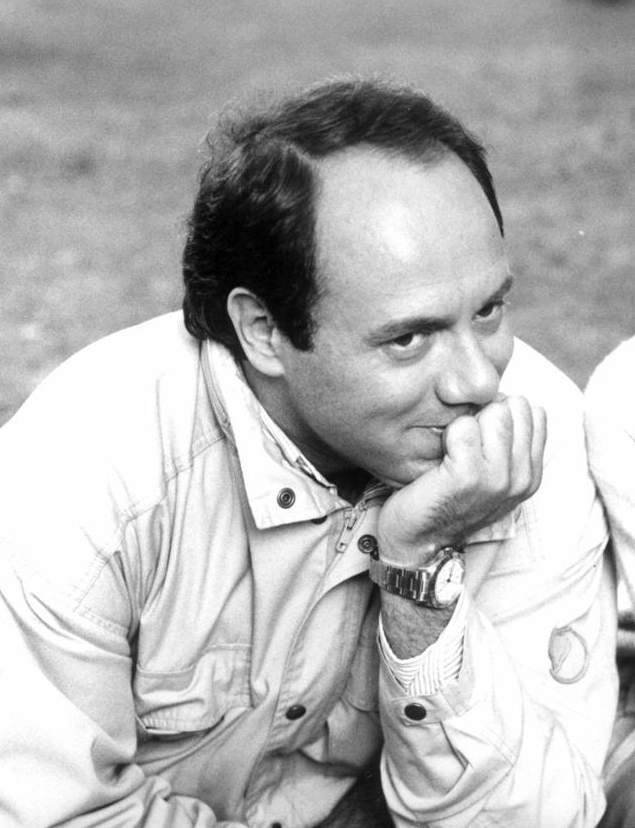
There is always something profoundly human at the heart of Carlo Verdone’s cinema: tenderness, fragility, unease. His characters inhabit entertaining, often exhilarating comedies, yet beneath the laughter runs a subtle current of melancholy and a persistent reflection on feelings.
This is particularly evident in four iconic films from the 1980s, which can also be interpreted as the four seasons of life and one’s soul: Borotalco, Acqua e Sapone, Io e mia sorella, Compagni di scuola. Together, they form a journey from the spring of illusion to the winter of disillusionment, passing through all the nuances in between. In the process, they reveal Verdone’s rare sensitivity as a filmmaker—his ability to portray vulnerability better than anyone else.
BOROTALCO: SPRING
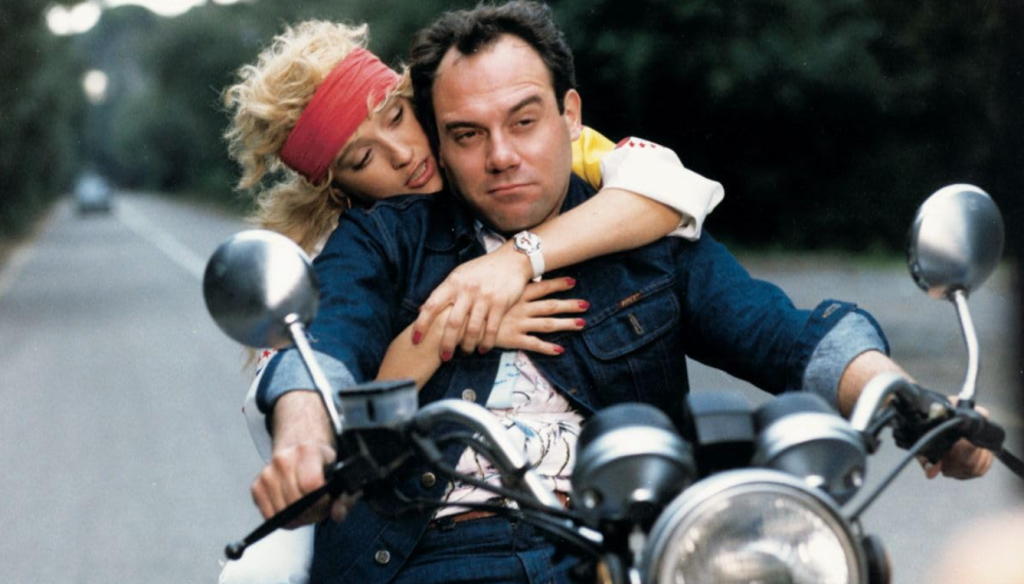
Borotalco (1982) marked a turning point not only in Verdone’s career, but in Italian comedy as a whole, which by then had been left without the great glories of its past. The director succeeded in reviving certain traditional stylistic elements while placing them within a modern, vibrant framework with a distinctly transatlantic spirit. The film’s original soundtrack, featuring Stadio and even the great Lucio Dalla, acts as a recurring thread throughout the film and contributed to its success, as did the remarkable performance of the late Eleonora Giorgi. The Roman actress possessed an extraordinary talent that she displayed across a wide range of genres, including Dario Argento’s cult film Inferno (1980).
Born from the foresight of producer Mario Cecchi Gori and the result of an exhausting process of writing and rewriting, Borotalco is a film about metamorphosis, about the temptation to become someone else in order to escape a suffocatingly ordinary existence, in the hopes of finding one’s own path in life. Verdone plays Sergio, the shy and awkward protagonist, who undergoes a sudden “rebirth”, an irresistible yet fleeting explosion of life. Something “intangible”, an idea already contained in the film’s very title, seems to hang in the air, ultimately leading him, albeit bitterly, towards greater self-awareness.
It is a fresh, springlike movie, where spring describes above all the protagonist’s state of mind. Sergio, initially “frozen” in a kind of existential hibernation, seizes the opportunity to “awaken” by assuming the identity of the imaginary Manuel Fantoni, the unsurpassed embodiment of contemporary mythomania. With enthusiasm and naivety, he finds himself confronting his spontaneous love for Nadia, herself a dreamer trapped in a stereotyped existence. The open, bittersweet ending finally reveals the characters without their masks, showing them for who they truly are, for better and for worse.
Borotalco is the story of ordinary people, of identities struggling to blossom. It is a sense of hope that perfectly reflects the “light”, sparkling, optimistic world of the early 1980s, emerging from the conflicts and pressures of Italy’s “Years of Lead” and moving towards what appeared to be a bright future.
ACQUA E SAPONE: SUMMER
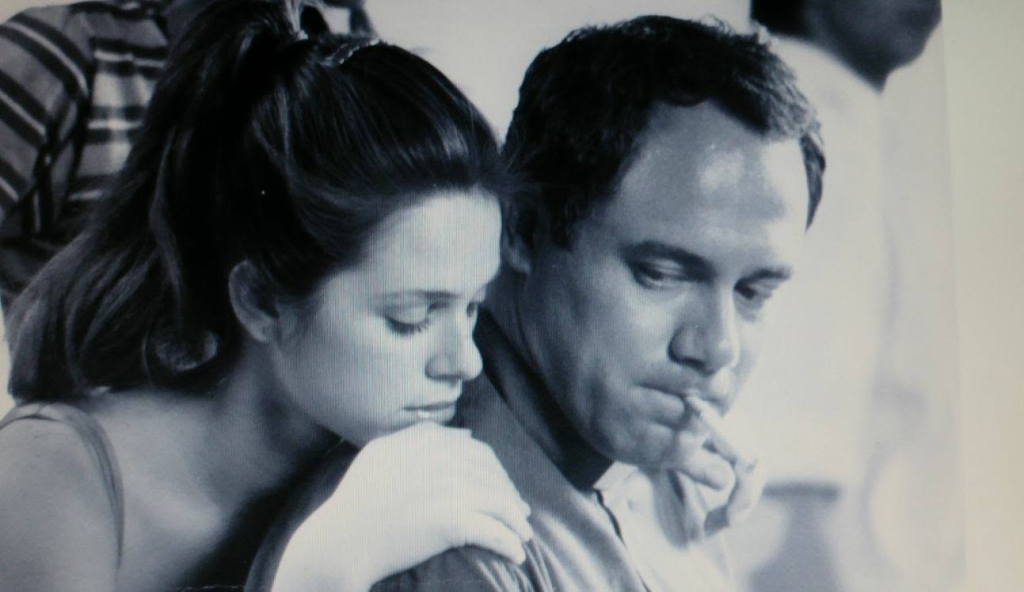
Acqua e Sapone (1983) is undoubtedly one of Verdone’s most beloved films, deeply embedded in Italy’s collective imagination thanks to its irresistible comic scenes and iconic performers, above all the incomparable Elena Fabrizi, better known as Sora Lella. It boasts an exceptional cast: the beauty of newcomer Natasha Hovey in the leading role, and is matched by the charisma of Florinda Bolkan, who had already appeared in numerous successful films, including Elio Petri’s extraordinary Investigation of a Citizen Above Suspicion (1970).
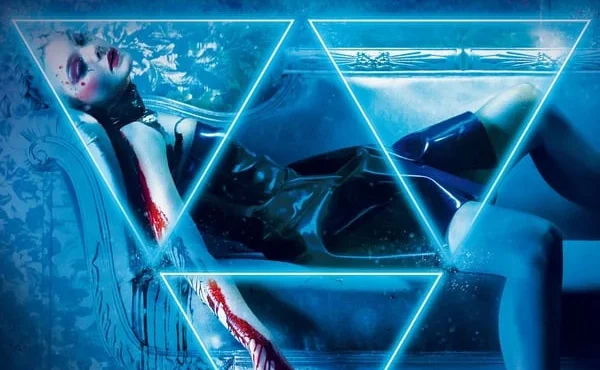
Several elements from Borotalco reappear in Acqua e Sapone, beginning with the soundtrack by Stadio, this time joined by the talent and sensitivity of a young Vasco Rossi. We also find the glittering atmosphere of the early 1980s, perhaps even more evident than before, because the story unfolds within the fashion industry, whose ruthless and hypercompetitive nature has been explored in various films over the years, including Nicolas Winding Refn’s The Neon Demon (2016). More specifically, the story draws on a troubling phenomenon that emerged during those years: very young girls being pushed by their parents into becoming seductive models. The contrast between natural, spontaneous beauty, free from vulgarity—an idea crystallized in the film’s very title—and artificial, media-driven beauty, gives the film a profoundly thought-provoking dimension. It is a lesson that extends to experiences, emotions, and feelings, such as those genuinely shared by the two protagonists.
Here Verdone plays Rolando, a teacher with no real prospects who is forced to work as a school janitor. He pretends to be a priest in order to become the private tutor of Sandy, a young American model. The truth, however, soon comes to light, revealing the unique value of an encounter capable of transforming his life and leading him towards maturity. Leopardi’s poem A Silvia, recited at the beginning of the film in a highly comic context, immediately introduces the central theme of prohibited love, which is, after all, the highest form of romantic love. It becomes a symbol of the inability to communicate between distant and incompatible worlds—a theme explored, albeit in a different form, in Peter Weir’s extraordinary Witness (1985).
In Acqua e Sapone, even light seems to become a character. The artificial light of camera flashes is contrasted with the genuine light of the sun. It is a brilliant light that suggests warmth, energy, and the sheer desire to live. We thus find ourselves faced with a profoundly summery film: a kind of “vacation” in which time expands and everything seems suspended, almost eternal. It is a splendid, crystalline, dazzling summer, so intense that it cannot possibly last long.
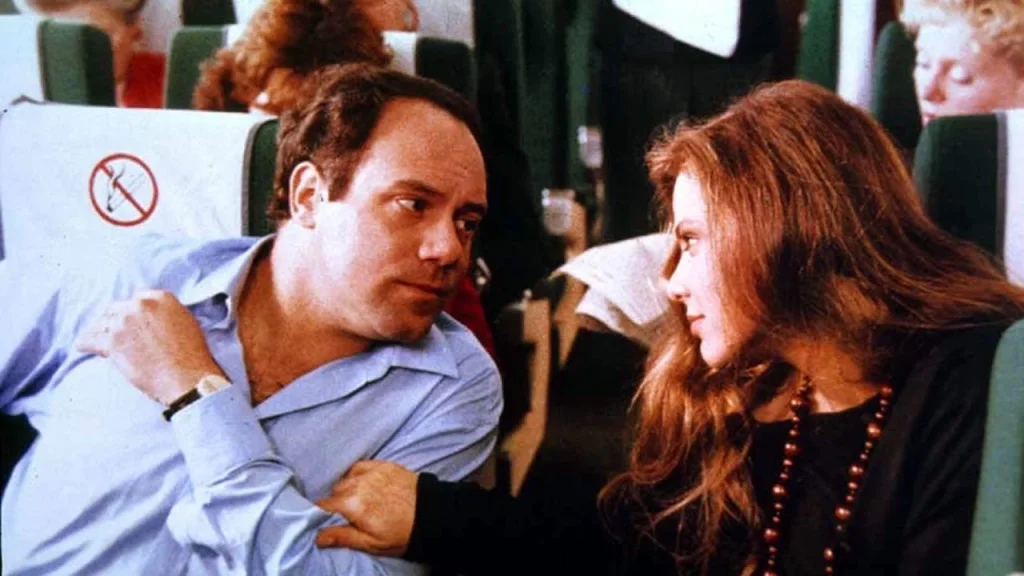
IO E MIA SORELLA: AUTUMN
Autumn is the word that best describes the emotional tone of Io e mia sorella (1987). It is the season when, after the rest and enjoyment of summer, we return to our responsibilities, but it is also a time of “storms”, testing how deeply our emotional bonds are rooted. By now, we are far removed from the carefree atmosphere of the early 1980s, and a sense of change and uncertainty runs throughout the film.
Verdone plays Carlo, a mild-mannered, habit-bound oboe player married to Serena, a cellist to whom Elena Sofia Ricci lends an air that is as sophisticated as it is cold. The couple lives in Spoleto, where they lead an apparently peaceful and fulfilling existence that is, in reality, monotonous and emotionally anesthetized. The death of Carlo’s mother, portrayed through a moment of suspended time with remarkable delicacy, becomes the event that forces him to confront his past and reconnect with his sister Silvia, whom he has not seen in years.
The arrival of Silvia, magnificently played by Ornella Muti, disrupts her brother’s life like a sudden change in the weather. Impulsive, restless, always running away, Silvia embodies a principle of disorder and chaos, but also of life itself, to which Carlo cannot remain indifferent. Forced to reconsider everything he was certain of, he begins to reflect on himself, on what truly matters, and on the genuine nature of the relationships in his life.
Always understanding and forgiving, Carlo nevertheless discovers that Silvia has left a son, Zoltán, behind in Hungary. It is the final straw. The two travel to Budapest and, after a series of misadventures, manage to bring the child home. But the story does not end there. Carlo is dragged all the way to Brighton, England, to rescue his sister from yet another false relationship, this time with a would-be rock star. Abandoned by his wife, Carlo finally comes to understand the meaning of unconditional love. It is here that the film reveals what it truly means to care for someone.
Verdone constructs a mature story in which drama gradually begins to make its way into comedy, and where humorous scenes often serve as opportunities to address complex social issues such as marriage, child custody, and sexuality; the latter having already been touched upon with particular sensitivity in his previous film.
Ultimately, Io e mia sorella is a film that explores the question of responsibility within our society, and it does so with an autobiographical touch. It is no coincidence that the protagonists are named Carlo and Silvia, the real-life names of Verdone and his sister.

COMPAGNI DI SCUOLA: WINTER
The fallen leaves of Io e mia sorella prepare the ground for the frost of Compagni di scuola (1988), Verdone’s masterpiece. Inspired by a personal experience—a reunion with former high-school classmates—it is an ensemble film that immediately demonstrates the director’s ability to handle a large cast, with memorable performances by Nancy Brilli, Massimo Ghini, Athina Cenci, and Christian De Sica. Eleonora Giorgi and Natasha Hovey also return, emphasizing the desire to bring the cycle full circle. Yet while hopes and genuine feelings still survive in the previous films, here everything has become cold and rigid, portrayed in its stark, unvarnished reality. There is no longer any room for love.
The classmates represent a microcosm in which society is reflected through a series of stereotypes: the politician, the boastful small-business owner, the penniless singer, the neurotic psychologist, and the dissatisfied teacher, Piero, played by Verdone himself. Beneath an apparently festive and affluent setting lies a poorly concealed poverty: emotional barrenness, hypocrisy, and weakness. It is a society in which the “healthy” and the “sick” can easily exchange roles. Fabris, the only character considered “sick”, is isolated and eventually leaves; yet he is also the only one who saves himself, almost as though we were witnessing an entirely original reinterpretation of Agatha Christie’s masterpiece And Then There Were None. In fact, none of the characters can truly be considered “innocent” when it comes to life: some have become what they never wanted to be, some have become nothing at all, and others merely fool themselves into believing they have become somebody.
With this film, Verdone enters the winter of full maturity: the season of reckoning. The main cinematic reference is Lawrence Kasdan’s The Big Chill (1983), although here the political and generational dimensions are not pushed to the forefront. Compagni di scuola is not a predictable critique of the overstimulated society of the 1980s or of bourgeois conformity. Rather, it is a reflection on the recurring patterns of human behavior: power seduced us, those perceived as “different” are rejected, envy consumes us, and nostalgia for youth becomes an illusory refuge. It is no coincidence that the film quotes the famous lines by Lorenzo de’ Medici—“How beautiful is youth…”—a bitter reflection on the fleeting nature of time, as relevant today as it was in the past. What envelops these classmates, now adults, is not the mantle of wisdom, but the appearance of a maturity they have never truly achieved. In one particularly delicate moment, Cristina’s innocence, the character portrayed by Natasha Hovey, is dramatically shattered, as expressed in the words: “I don’t want to become like you”.
The 1980s are drawing to a close, and very little hope remains. The bipolar world order is beginning to crumble, while the future appears increasingly fragmented and stripped of any clear certainties. And yet, as the film’s ending suggests, the winter of Compagni di scuola is not the end of everything. It is simply a moment in which we come to understand that life moves forward regardless, while we wait for a new spring.
CONCLUSIONS
Across the four films that make up Carlo Verdone’s “seasons of the soul”, the director effectively traces a cyclical journey in search of identity. The characters he plays—Sergio, Rolando, Carlo, and Piero—are all united by the desire to express their true selves.
Yet, as Pirandello teaches us, identity in the modern world is anything but unified. There is always a conflict between who we are and who the world expects us to be. In order to be accepted and recognized, individuals often find themselves forced to wear different masks for different audiences. In Borotalco, the mask becomes an entirely new personality; in Acqua e Sapone, it is merely a disguise that does not alter the authentic self; in Io e mia sorella, the mask is gradually abandoned through a process of self-awareness; and finally, in Compagni di scuola, it has become frayed—something the characters cling to in the hope of concealing their failures.
Yet through his compassionate gaze, Verdone reminds us that behind every mask lies the same fundamental need: the desire to love, and to be loved, for who we truly are.
[Disclaimer]
The images featured in this article are sourced from the following websites: link, link, link, link, link.
These images are protected by copyright and are shown here solely for illustrative purposes, without any commercial intent.